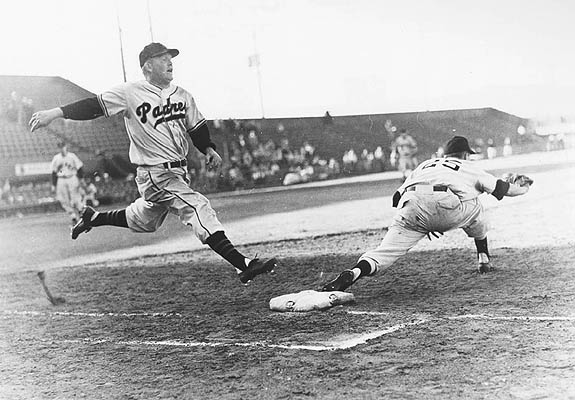
In my opinion, one of the most interesting parts of Baseball history is the old Pacific Coast League. While the old PCL is considered a “Minor League” because the teams often operated as Minor Leagues for Major League clubs on and off during their history, this was not always the case. In other words (according to wiki): “Most PCL clubs, operated without a working agreement with or outright ownership by a major league team throughout much of the 1930s and 1940s, and again in the mid-1950s when the PCL was an Open Classification league attempting to attain MLB status.” Basically this means for long periods of time during the first half of the 20th century till around 1958 when The Giants and Dodgers relocated to California, many teams in the PCL operated entirely independent from the Major Leagues and without direct competition from the Major Leagues. The PCL was considered nearly level skill-wise as the Major Leagues and the PCL teams often played over 200 games a season due to the West Coast weather. In addition in the early 20th century, many Major League players who wanted to make a living during their off-season played with the PCL in the winter to make money and to keep their Baseball skills sharp.
The organizations of the PCL thrived with large and passionate fan bases with remnants that can still be felt today. Teams such as the San Diego Padres, San Francisco Missions & their in-town rival San Francisco Seals, Oakland Oaks, Portland Beavers, Hollywood Stars and Los Angeles Angels to name a handful have a colorful and rich history definitely worth reading up on. Books and collections such as The Pacific Coast League, 1903-1988 by Bill O’Neal and The Was Paradise: Voices of the Pacific Coast League Padres, 1936-1958 by by William G. Swank and James D. Smith III offer great information and detail about the PCL, it’s teams and players. If reading is just not your thing there is tons of great information on the PCL online. I believe every team that existed has a wiki page with great detail and with a little googling you can find some great sites put together with awesome info. A site which looks like it has great potential if they keep it updated and really put some time in it is Old Coast League.
If you love Baseball and even American History of the West Coast in the 20th Century, I strongly suggest reading up on the old PCL. In the mean time, enjoy these photos & information on some of the more well known players of the PCL:
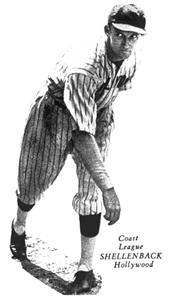
Frank Shellenback. Elected to the PCL Hall Of Fame in 1943, Shellenback is often considered the greatest PCL pitcher of all time. He was a spitballer who finished his PCL career with a 295-178 record, with 361 complete games, and 4,185 innings pitched. While he did spend parts of 2 seasons in the Major Leagues with the ChiSox in 1918 and 1919, he left to the PCL after the spitball was banned in the Major Leagues in 1919. He spent the rest of his playing career (19 seasons, from 1920-38) playing in the PCL where he could throw the spitball legally. He played with the Vernon Tigers, Sacramento Solons, Hollywood Stars, and San Diego Padres. After his playing career he went on to become a Manager and was actually the San Diego Padres first Manager in 1936 where he helped discover and coach a young Ted Williams. Teddy Ballgame often went on record as saying Shellenback was the best coach he ever had. After managing he later was a pitching coach for Major League clubs such as the NY Giants, Detroit Tigers, Boston Red Sox, and the St. Louis Browns. For more information, there is a GREAT article with detailed information at THE BASEBALL BIOGRAPHY PROJECT.
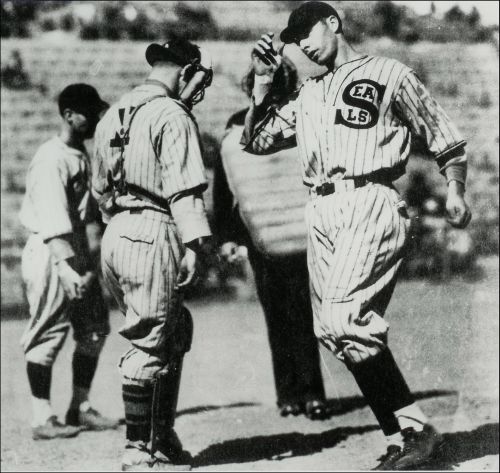
Joe DiMaggio. As a member of the San Francisco Seals in 1932, DiMaggio played 3 games with the Seals while not under contract and for free. Due to the fact he played them for free he was removed from the games records at that time as he was not a “Professional.” This is because a player had to be under contract and be paid to be deemed professional. Joe DiMaggio started his official PCL career in 1933 until 1935 when he was sold to the NY Yankees for $25,000 dollars and five players. He debuted with the New York Yankees on May 3, 1936 and the rest was history. A not so well known fact about Dimaggio’s days as a San Francisco Seal is that he actually had a 61 game hitting streak in 1933, which at the time broke all Professional Baseball records.
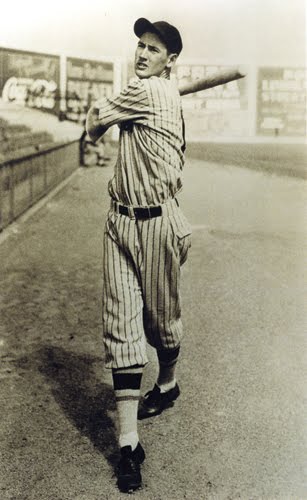
Ted Williams. From 1936 to 1937 Williams was a member of the San Diego Padres before leaving to play for Boston Red Sox Double A team, the Minneapolis Millers. During his time in the PCL he played in 180 games where he had 161 hits, 23 homeruns, and batted .271 in 1936 and .291 in 1937. A nice little piece of information is that he wore number #19 for the Padres…the same number that a player often compared to himself would wear with the Padres almost 50 years later: Tony Gwynn.
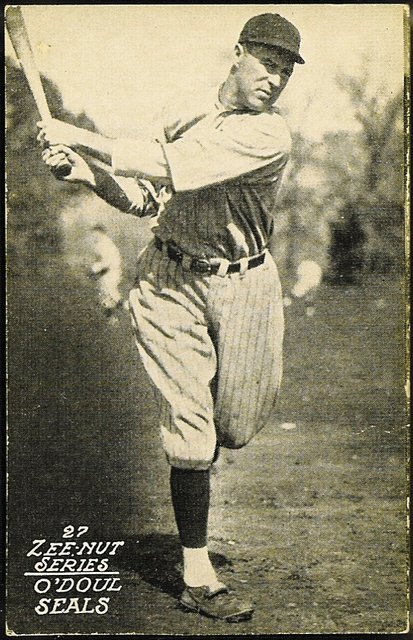
Lefty O’Doul. Francis Joseph “Lefty” O’Doul started his PCL career in 1917 as a pitcher for the San Francisco Seals. From 1919 to 1923 Lefty pitched in the Major Leagues with the Yankees and Red Sox before arm troubles shut him down as a pitcher. This is when Lefty returned to the PCL and reinvented himself as an outfielder who could hit the ball far better than he could ever pitch. He eventually returned to the Major Leagues in 1928 where he became NL batting champion twice in his career (1929, 1932), became an all-star, and won a World Series ring in 1933. After the 1934 season, he once again returned to the PCL where of spent the rest of his career as a player and manager. the all-time winningest manager in PCL history, he managed the San Francisco Seals (1937 to 1951), the San Diego Padres (1952-1954), Oakland Oaks (1955), Vancouver Mounties (1956), and finished up his managing career with the Seattle Rainiers in 1957. Here are some pieces of fun information about Lefty:
– He managed all 3 Dimaggio brothers during his time as manager of the Seals.
– Is one of the very few Major Leaguers to play for all 3 New York teams (Yankees, Giants, Dodgers).
– Is credited as being one of the individuals to help bring baseball to Japan.
– Is in the Bay Area Sports Hall of Fame and the Japanese Baseball Hall of Fame but not in the MLB Hall of Fame.
– Founded Lefty O’Doul’s Restaurant in San Francisco which is still there to this day.
Posted in Uncategorized
Tags: boston red sox, chicago white sox, detroit tigers, frank shellenback, hollywood stars, Joe DiMaggio, lefty o'doul, los angeles angels, Minneapolis Millers, new york giants, oakland oaks, pacific coast league, portland beavers, sacramento Solons, san diego padres, san francisco mission reds, san francisco seals, seattle rainiers, st. louis cardinals, ted williams, Vancouver Mounties, vernon tigers





 ninety feet of perfection.